
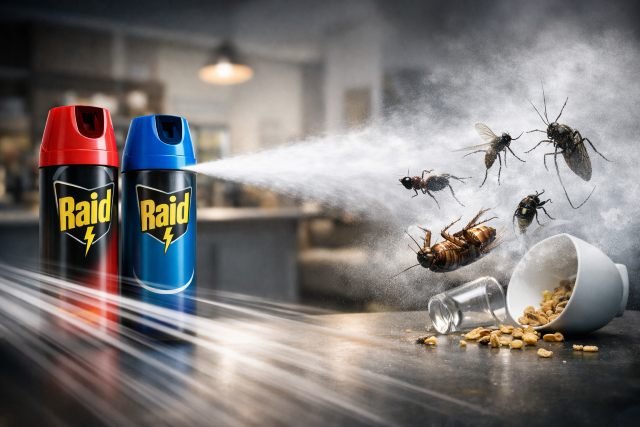
When insects show up unexpectedly, people want an instant solution. Spray raid remains one of the most popular choices because it works quickly, is widely available, and usually kills visible pests within minutes.
However, spray raid is not a complete pest control solution by itself. It works best as a fast knockdown tool, while deeper methods such as sealing entry points, sanitation, and bait systems help eliminate the root cause. In this guide, you’ll learn exactly how spray raid works, when it’s the right choice, what it cannot solve, and how to use it safely while getting the fastest possible results.
What Is Spray Raid?
Spray raid refers to Raid-brand aerosol insecticides designed to kill household pests such as roaches, ants, spiders, mosquitoes, and flies. Many Raid aerosol products contain pyrethroid active ingredients, such as cypermethrin and imiprothrin, which affect the insect nervous system and lead to paralysis and death. SC Johnson provides ingredient disclosures for many Raid insect control products.
How Spray Raid Works and Why It Feels Instant
Spray raid is generally considered a contact insecticide. That means insects die when they are sprayed directly or walk over treated surfaces soon after application. The fast-kill effect occurs because pyrethroids disrupt nerve signals, which produces rapid knockdown and death. This immediate result is why people often feel spray raid is the fastest home solution.
Even so, spray raid often does not reach hidden nesting zones behind walls, inside appliances, or deep in cracks. Public health pest programs often recommend integrated pest management principles, which rely on prevention and targeted treatments rather than relying on sprays alone.
When Spray Raid Works Best and When It Doesn’t
Spray raid works best when you are dealing with a small number of pests and need quick elimination. It is also useful when you are treating a specific entry point such as a crack near a door, a window gap, or baseboard openings.
Spray raid often fails when infestations are large, especially with roaches and ants, because killing visible insects does not remove the colony or nest. It can also create short-term improvement while allowing the root cause to persist, which is why pests can reappear within days.
Spray Raid for Roaches: Fast Results With the Right Strategy
Roaches are one of the most common reasons homeowners use spray raid. It can kill roaches quickly when sprayed directly, but it must be part of a smarter plan to actually reduce infestation levels.
The best approach is to use spray raid as a visible-kill tool first, then treat likely hiding spots such as cabinet corners, baseboards, plumbing gaps, and the areas behind refrigerators and stoves. Once the immediate problem is under control, gel bait or bait stations should be added because bait is designed to reach deeper into hidden populations. When roaches feed on bait and transfer it to nesting zones, colony-level reduction becomes possible.
Spray Raid for Ants: The Fastest Way to Stop the Trail
Spray raid kills ants quickly, but ants are colony insects, so killing workers is only a short-term fix. If you spray ants heavily, it may disrupt the trail temporarily but fails to remove the nest. In some cases, it can even cause the colony to move or split, creating new trails later.
A stronger method is to use spray raid on entry points and cracks, then remove the trail scent by cleaning the path where ants were traveling. At the same time, bait systems help eliminate the colony because workers carry bait back to the nest. The most important rule is not to spray directly where bait is placed because ants may avoid sprayed areas.
Spray Raid for Flying Insects: Quick Relief Indoors
Spray raid can be highly effective against flying insects like mosquitoes, flies, and moths, especially when used indoors as a rapid control method. CDC guidance notes that indoor spraying can reduce mosquitoes inside the home, but prevention strategies such as screens and eliminating standing water remain essential for long-term control.
For quick relief, spray near corners and windows where insects cluster. Improve airflow afterward by opening windows and using fans. Then prevent future intrusion by sealing gaps and repairing screens.
Safety: How to Use Spray Raid Indoors Without Risk
Indoor pesticide use is extremely common, and the EPA emphasizes that pesticides are toxic by design and should be used with caution to reduce unnecessary exposure indoors.
Safe use begins with the label. The label tells you where the spray is approved for use, how long to ventilate, where not to spray, and what to do if exposure occurs. Many Raid products are regulated pesticide products, and their approved use is based on label directions under EPA registration rules.
Ventilation matters because aerosols can linger in air, especially in small rooms. You should remove pets, cover fish tanks if required, remove food items, and avoid spraying on food preparation areas. Over-spraying should be avoided because more product does not equal better results. It increases residue, raises exposure risks, and can lead to pests avoiding treated areas.
Why Spray Raid Alone Often Fails Over Time
The biggest reason spray raid alone fails is that it targets what you see, not what you don’t. Most infestations originate from hidden areas such as wall voids, drains, appliance motors, or outdoor nesting zones. If food and moisture remain available, insects can repopulate quickly.
Over-reliance on one insecticide type can also reduce effectiveness over time. Research shows that insecticide resistance is a growing global issue, especially with pyrethroids used in mosquito control, which is one reason WHO has called attention to the need for resistance management strategies.
Even though household pests differ from disease-vector mosquito programs, the principle still applies: repeated use without addressing the source reduces long-term success.
The Fast Prevention Tips That Multiply Spray Raid Results
Spray raid becomes significantly more effective when paired with prevention. Sealing entry points prevents new insects from entering. Removing food access breaks feeding cycles. Fixing water leaks reduces conditions that roaches and ants rely on. Clutter reduction removes hiding spaces.
This is why integrated pest management is widely recommended. It reduces reliance on chemicals while producing stronger long-term results through prevention, monitoring, and targeted action.
Real-World Scenario: Spray Raid That Actually Worked
A homeowner noticed roaches near the sink at night and sprayed raid repeatedly. The roaches kept returning, which made it feel like the spray wasn’t working. The real issue was that the roaches were nesting behind the refrigerator and entering through a wall crack.
Once spray raid was used only to kill visible roaches, the entry crack was treated, gel bait was placed behind the refrigerator, water sources were reduced, and the gap was sealed. The infestation dropped quickly and stayed under control because the source was removed, not just the visible insects.
FAQ
What is spray raid used for?
Spray raid is used for quick control of insects such as roaches, ants, and flying pests. It is most effective as an immediate kill solution when pests are visible.
Does spray raid kill roaches instantly?
Spray raid can kill roaches quickly when sprayed directly, but it often does not remove hidden nests. For infestations, bait and sealing gaps are needed for lasting results.
Is spray raid safe to use indoors?
Spray raid can be used indoors when used according to label directions. Safety depends on ventilation, avoiding overspray, and keeping pets and children away until it is safe to return. EPA emphasizes careful pesticide use indoors to reduce exposure risks.
Why do pests come back after using spray raid?
Pests come back because spray raid kills visible insects but often does not eliminate the colony, nest, or entry points. If food and moisture remain available, pests can return quickly.
Can I spray raid in the kitchen?
You can, but you must avoid food preparation surfaces and follow label rules carefully. Remove food, utensils, and pet bowls before spraying and ventilate the area afterward.
Conclusion: Spray Raid Works Fast, But Smart Use Works Best
Spray raid is one of the fastest tools for immediate pest control, especially when you need quick elimination of roaches, ants, or flying insects. It works best for visible insects and short-term control.
But for spray raid to deliver results that truly last, it must be paired with prevention methods such as sealing entry points, removing food and moisture sources, and using baits for colony control. When you combine fast action with smart prevention, you don’t just kill pests — you stop them from coming back.