
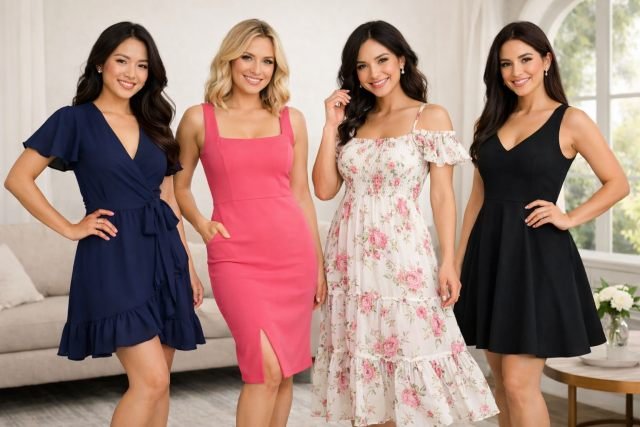
Shopping for dress petite dresses can be frustrating because many regular dresses are designed for longer torsos, lower waist placement, and longer hems. That’s why petite shoppers often experience waistlines sitting too low, straps slipping, and hems landing in awkward places. Petite fashion isn’t simply smaller sizing; it’s proportion-based design that adjusts torso length, sleeve length, and seam placement to fit shorter frames more naturally.
The average height for women in the U.S. is about 5 ft 3.5 in, which means a large portion of shoppers may benefit from petite-focused fits or at least petite styling rules.
What Counts as Petite in Dresses?
In fashion, petite typically refers to women 5’4″ (162 cm) and under, but the real difference is proportions rather than height alone. Petite dress patterns usually include shorter rises, higher waist placement, narrower shoulders, and scaled sleeve and skirt lengths so the garment looks intentional instead of oversized.
This is why choosing a smaller regular size doesn’t always solve fit issues. A regular size may still have a waist seam that falls too low, sleeves that are too long, and armholes that don’t sit properly. Petite cuts are meant to correct that structure.
Why Regular Dresses Often Look Off on Petite Frames
Many regular dresses appear unbalanced on petites because the design assumes longer limbs and torso length. When a waist seam drops down to the hips, it visually shortens the legs and creates a slouchy silhouette. When a midi dress becomes a maxi, it interrupts proportions and can overwhelm the frame. Even details like oversized pockets, giant prints, or heavy ruffles can dominate petite shapes, making the wearer look shorter or wider than they actually are.
Petite-specific sizing addresses these issues by repositioning key construction points like bust darts, waist seams, and armholes so the dress sits correctly and flatters the body rather than distorting it.
The Golden Rule for Dress Petite Dresses: Prioritize Proportion
The best petite style advice is not always about looking taller. Instead, it’s about creating balanced proportions. This means defining the waist, choosing lengths that don’t cut the body awkwardly, and avoiding excessive fabric volume that hides shape. Petite styling experts often recommend clean lines, intentional structure, and smart use of vertical details because these naturally flatter shorter frames and make outfits appear polished rather than bulky.
A good petite dress should feel like it was designed for your frame, not adjusted after the fact.
Best Dress Lengths for Petite Women
Dress length is one of the biggest factors that determines whether a dress feels flattering or awkward. Minis typically work well because they show leg and keep proportions light. Midis can look elegant on petites but they need careful placement. The most flattering midi hemline hits just below the knee or closer to the ankle; mid-calf lengths are often less flattering because they cut the leg line at its widest point. Fashion editors regularly caution petites to be selective with mid-calf hems for this reason.
Maxi dresses can also be flattering on petites as long as they skim the body, define the waist, and end near the ankle without pooling. When done right, a maxi creates a long vertical line and looks effortlessly elegant.
The Most Flattering Dress Styles for Petite Frames
Wrap dresses are one of the best dress petite dresses options because they create a V-neckline and define the waist, which naturally elongates the body. Fit-and-flare dresses are another standout because they balance the frame by emphasizing the waist and adding gentle movement without excess volume. Sheath dresses work well for petites who want a sleek silhouette because they create a clean vertical line that looks polished and professional. Slip dresses are also frequently recommended for petites since they create a continuous line and avoid bulky fabric, making them ideal for both casual styling and dressy occasions.
Shirt dresses can be flattering too, but petites should prioritize styles where the waist placement is correct and the skirt isn’t overly full. When the shirt dress is cut specifically for petite proportions, it becomes one of the most versatile wardrobe staples.
Choosing the Right Waist Placement: The Petite Game-Changer
Waist placement is the number one detail that determines whether a dress will look tailored or sloppy on a petite frame. A waist seam that hits too low lengthens the torso visually and shortens the legs. This is why high-waisted, empire waist, and belted styles tend to flatter petites more consistently. Petite sizing often improves this by shifting seam placement upward so the dress aligns with the wearer’s true waist.
When shopping online, always pay attention to where the model’s waist seam sits, then compare it to your own body proportions. If the waist seam lands on the model’s natural waist and the model is around petite height, that’s a good sign the dress may work well for you.
Best Necklines for Petite Women
Necklines can dramatically change how tall and balanced you appear. V-necks are widely recommended for petite frames because they open the chest area and create a vertical visual line. Square necklines are flattering because they highlight the collarbone and keep the top half of the body looking open and structured. Scoop necklines offer a softer option while still preventing the “boxed-in” look that high necklines sometimes create. Petite styling guides often emphasize open necklines because they reduce visual heaviness and make outfits feel lighter.
Sleeves, Straps, and Details That Work Best
Sleeves and straps matter more than most people realize because they affect fit and proportion. Three-quarter sleeves are often a great option for petites because they show the wrist and keep the arm line looking longer. If you prefer long sleeves, make sure the cuff hits at the wrist rather than covering the hands. Armholes that sit too low can make straps slip and create bunching in the upper body, which is why petite cuts are often worth investing in.
When it comes to prints, petites usually look best in smaller-scale patterns and subtle contrasts. Oversized prints and heavy horizontal elements can dominate the frame and make the outfit feel unbalanced.
Fabric Choices That Flatter Petite Bodies
Fabric plays a major role in how petite dresses fall and how “heavy” they look visually. Lightweight, drapey fabrics like crepe, satin, viscose, and soft cotton blends typically flatter petite frames because they skim rather than overwhelm. Structured fabrics can work too, but they need to be cut precisely to avoid adding unnecessary bulk.
Stiff fabrics like heavy taffeta or thick rib knits can be trickier because they add volume and width. If you love those fabrics, balance them with a more fitted waist and a clean neckline.
Dress Petite Dresses by Occasion
For casual outfits, petite-friendly dresses are often simple and waist-defined, such as wrap minis, t-shirt dresses with shape, or lightweight A-line silhouettes. For workwear, sheath dresses and structured wrap styles tend to look the most polished, especially when paired with cropped blazers that keep proportions balanced. Wedding guest dresses should emphasize waist definition and elegant hem placement; fit-and-flare midis, slip dresses, and refined wrap styles are all reliable choices. For evening events, sleek silhouettes often work best because they create a long line and photograph well, making bodycon, slip, and off-shoulder styles especially flattering.
Styling Tips That Make Petite Dresses Look Expensive
One of the easiest ways to elevate petite dresses is to define the waist and avoid breaking the body into too many horizontal lines. Monochrome outfits are often recommended because they create a smooth vertical flow and make the silhouette appear longer and cleaner.
Shoes matter too. Pointed-toe flats or nude heels extend the leg line. Accessories should stay proportional, as oversized handbags can visually shrink petite frames. Cropped outerwear helps maintain balance, while long coats should be tailored or worn open to avoid shortening the silhouette.
Alterations: The Petite Secret Weapon
Alterations are not a failure—they’re often what separates a “fine” dress from a perfect one. Fashion editors often recommend hemming as the most impactful petite adjustment because the right hem instantly improves proportion.
Strap shortening, sleeve adjustments, and small waist tailoring are also valuable, especially for occasionwear. If you buy more expensive dresses, budgeting for simple alterations is often the smartest move you can make.
How to Shop Online for Dress Petite Dresses With Confidence
Online shopping becomes easier when you know what to look for. Pay attention to model height, review photos, and comments that mention whether the dress runs long. Petite sections are ideal, but even within regular sizing, you can find good dresses by choosing adjustable straps, belt ties, or styles with flexible fit structures. Fabric composition matters too, so always check whether the dress is drapey or stiff.
If you regularly face petite fit issues, focus on brands that offer petite-specific sizing because the construction adjustments usually solve the biggest problems around waist placement and sleeve length.
FAQ: Dress Petite Dresses
What does petite mean in dresses?
Petite means the dress is designed for shorter proportions, usually for women 5’4″ and under, with adjusted waist placement, torso length, sleeves, and hem.
Can petite women wear midi dresses?
Yes, but the hem should hit just below the knee or closer to the ankle. Mid-calf lengths can visually shorten legs, so petites should choose midi lengths carefully.
What is the best dress style for petite women?
Wrap, fit-and-flare, sheath, and slip dresses are often the most flattering because they define the waist and create clean lines.
Are maxi dresses flattering on petites?
They can be, especially when the dress skims the body, defines the waist, and ends near the ankle without pooling.
Conclusion: Dress Petite Dresses Are About Fit, Balance, and Confidence
Choosing the right dress petite dresses is less about height and more about proportion. When the waistline hits correctly, the hem lands in a flattering place, and the fabric doesn’t overwhelm your frame, petite dressing becomes easy and empowering. The best petite dresses create balance, highlight your natural shape, and feel tailored even without alterations.
Focus on waist definition, choose mini, carefully selected midi, or ankle-skimming maxi lengths, and keep details scaled to your frame. With these strategies, you’ll build a petite dress wardrobe that looks polished, flattering, and effortlessly stylish.