
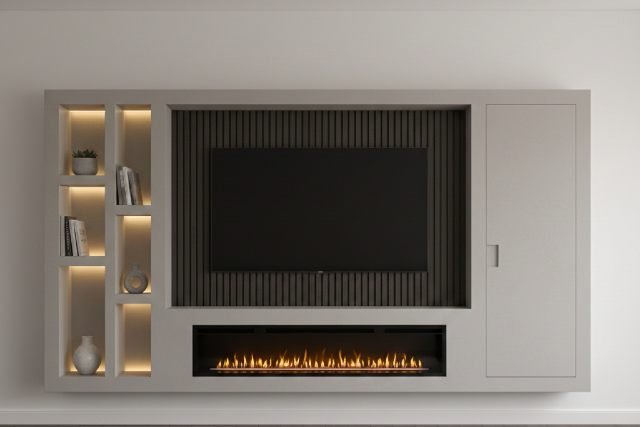
Media walls have quickly become one of the most desirable interior upgrades in modern homes. A media wall is a purpose-built feature wall that houses a television along with storage, sound systems, lighting, and sometimes a fireplace. The goal of a media wall is to create a clean, cohesive focal point while hiding cables and reducing visual clutter.
In the first few moments of entering a living room, media walls immediately draw attention and set the tone for the entire space. Because they combine both function and design, media walls are now seen as a premium alternative to traditional TV units.
What Are Media Walls?
Media walls are custom-designed wall structures built to integrate entertainment systems into the architecture of a room. Unlike standard TV stands, media walls are fixed installations that provide a seamless appearance. They are commonly constructed using stud frames and finished with plaster, panels, wood, or stone-effect materials.
Media walls can be designed for both small and large rooms, making them a flexible solution for apartments, houses, and open-plan living spaces.
Why Media Walls Are So Popular
Media walls are popular because they elevate the overall look of a room while improving usability. Homeowners appreciate the clean appearance created by concealed wiring and built-in storage. Designers favor media walls because they allow creative freedom with textures, lighting, and layout.
Industry design platforms such as Houzz consistently report that built-in entertainment features rank among the most requested living room upgrades, especially in new builds and renovated homes.
Media Walls Cost Overview
The cost of media walls varies significantly depending on design complexity, materials, and installation method. A basic media wall designed to hold only a television is the most affordable option. More advanced media walls that include shelving, cabinetry, or fireplaces fall into a higher price range.
On average, a professionally installed media wall can range from a modest investment to a high-end bespoke feature. Luxury media walls with premium finishes and integrated fireplaces can cost considerably more, especially when custom-built.
Factors That Influence Media Wall Cost
Several elements affect the final price of media walls. The overall size of the wall plays a major role, as larger designs require more materials and labor. The type of finish also impacts cost, with wood panels, stone cladding, and marble-effect surfaces being more expensive than painted plaster.
Additional features such as LED lighting, built-in storage, and electric fireplaces further increase the cost. Professional installation generally adds to the budget but ensures safety, durability, and a polished result.
Popular Media Wall Design Options
Media walls come in a wide variety of styles to suit different interiors. Minimalist media walls focus on simplicity and clean lines, often featuring neutral colors and a flush-mounted TV. These designs are ideal for modern homes and smaller spaces.
Media walls with electric fireplaces are among the most popular choices today. They create a striking focal point while adding warmth and ambiance without the maintenance of a traditional fireplace. Floating media walls, which appear suspended from the floor, offer a sleek and contemporary aesthetic.
Wood slat media walls and stone-finish media walls are also trending. Slatted panels add texture and warmth, while stone or marble-effect designs bring a sense of luxury and sophistication to living areas.
Media Wall Installation Process
The installation of media walls typically begins with careful planning and accurate measurements. The position of the television, power outlets, and cable routes must be decided in advance to ensure a clean finish.
A stud frame is then constructed to support the structure and create space for wiring. Electrical work follows, including sockets, lighting, and fireplace connections, which should always be handled by a qualified professional. Once the frame is boarded and plastered, the final finishes such as paint, panels, shelving, and lighting are installed.
DIY vs Professional Media Wall Installation
Some homeowners choose to build media walls themselves to reduce costs. While a DIY approach can work for simple designs, it requires tools, technical skills, and experience with measurements and electrical planning.
Professional installation offers a higher-quality finish and reduces the risk of errors. For media walls that include fireplaces or complex lighting systems, professional installation is strongly recommended for safety and compliance.
Common Media Wall Design Mistakes
One of the most common mistakes with media walls is mounting the television too high, which can cause discomfort during viewing. Poor ventilation for fireplaces and electronic equipment can also lead to long-term issues.
Overloading shelves, ignoring cable management, and prioritizing appearance over function are additional problems that can be avoided with careful planning and expert advice.
Are Media Walls Worth the Investment?
Media walls are often seen as a worthwhile investment because they enhance both daily living and property appeal. A well-designed media wall creates a focal point that feels intentional and high-end. It also helps maximize space and reduce clutter, which is particularly valuable in modern homes.
When designed correctly, media walls can improve the perceived value of a property and make living spaces more enjoyable.
Conclusion
Media walls offer a stylish and practical way to transform a living room into a modern entertainment hub. By understanding media walls cost, design options, and installation requirements, homeowners can make informed decisions that suit both their budget and lifestyle.
Whether you prefer a minimalist TV wall or a statement media wall with a fireplace, thoughtful planning and quality materials are key to achieving a lasting and visually impressive result.